
New York City Real Estate in 2026: The Dream of Homeownership Within Reach
-
 by Amy Wong
- 6月 16, 2026
- Current, Real Estate, Year-of-2026
- 0
New York City Real Estate in 2026: The Dream of Homeownership Within Reach
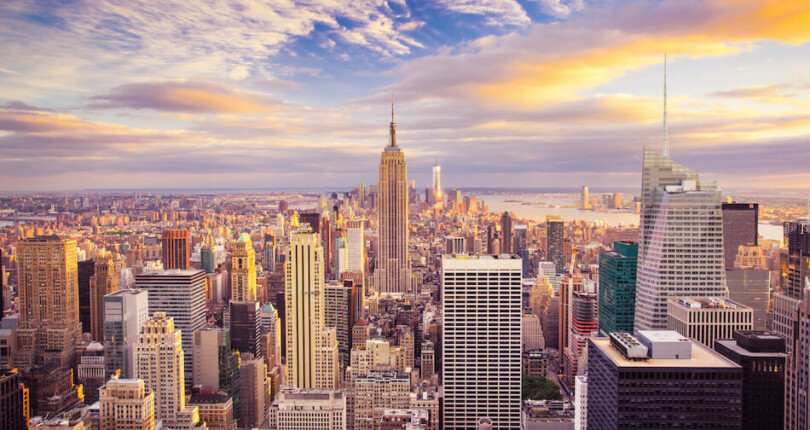
For decades, the phrase “buying a home in New York City” has been synonymous with financial impossibility for the average earner. The city’s skyline, a testament to architectural ambition, has long been accompanied by a housing market that seemed to defy gravity, pricing out generations of aspiring homeowners. Yet, as we navigate through 2026, a subtle but significant shift is occurring. Driven by a confluence of economic adjustments, innovative urban planning, and a recalibration of market expectations, the dream of owning a piece of the Big Apple is no longer a distant fantasy. It is, perhaps, finally within reach for a broader segment of the population.
The most immediate catalyst for this change is the stabilization of mortgage rates. After years of volatile increases that effectively froze the market, interest rates have gradually settled into the low 6% range. While historically this may not be considered low, in the context of the recent past, it represents a crucial release valve. This moderation has unlocked a wave of pent-up demand from buyers who had been sidelined, injecting a healthier volume of transactions into the market. According to forecasts from the National Association of Realtors, existing home sales in the region are expected to rise by approximately 14% in 2026. This increased activity is not a return to the frenzied, overpriced bidding wars of the past, but rather a sign of a market finding its natural rhythm.
Crucially, 2026 marks a pivotal economic turning point: for the first time since the 2008 financial crisis, wage growth is consistently outpacing home price appreciation. Redfin’s annual outlook highlights this “Great Housing Reset,” noting that while prices are still rising, they are doing so at a much more moderate pace, with median sale price increases projected at a mere 1% to 4% depending on the area. Meanwhile, salaries have been climbing at a steadier rate of around 4%. This narrowing gap is the single most important factor in improving housing affordability. It means that the monthly financial burden of a mortgage is becoming a smaller percentage of a household’s income, slowly chipping away at the barrier to entry.
Beyond macroeconomic trends, the very fabric of New York’s housing supply is being reimagined. With new ground-up construction in Manhattan slowing due to high costs, developers are increasingly turning to adaptive reuse. The conversion of underutilized office buildings into residential apartments is no longer a niche strategy but a central pillar of the city’s housing plan. Ambitious projects, such as the transformation of the former Pfizer headquarters on East 42nd Street into nearly 1,600 rental units, are set to deliver thousands of new homes. Coupled with strategic rezoning in areas like South Midtown and Long Island City, these initiatives are strategically increasing density in well-connected neighborhoods, creating new pathways to both renting and, eventually, owning.
However, it is vital to acknowledge that “within reach” does not mean universally affordable. The New York market of 2026 is defined by stark differentiation. The ultra-luxury segment in prime Manhattan continues to thrive, driven by global wealth and a scarcity of trophy properties. Conversely, more affordable boroughs and outer neighborhoods are seeing the most significant gains for middle-class buyers. Areas like Inwood in Manhattan, Mott Haven in the Bronx, and Rego Park in Queens are emerging as focal points. These communities offer a compelling value proposition: relative affordability, improving transit links, and a vibrant local character. For first-time buyers, these areas represent the new frontier of NYC homeownership, where a budget can stretch further without sacrificing a connection to the city’s core.
The rental market, too, plays a role in this evolving narrative. While rents remain high, the forecasted increase in new rental supply is expected to bring some stability. This stabilization is key, as it allows prospective buyers to save for a down payment without being perpetually outpaced by annual rent hikes. Furthermore, as more renters find their housing costs stabilizing, they can more accurately plan for the transition to ownership. The market is becoming more balanced, offering buyers slightly more negotiating power and a wider selection of properties, especially for those willing to look at homes that need modernization rather than turnkey luxury.
Political and policy discussions also continue to shape the landscape. While proposals like rent freezes create uncertainty, they also underscore the urgent political will to address housing affordability. The city’s massive capital investment plan, allocating over $173 billion for infrastructure, transit, and parks, is a long-term bet on New York’s future livability. These improvements enhance the desirability of emerging neighborhoods, indirectly supporting property values and quality of life for new homeowners.
Ultimately, the optimism for 2026 is rooted in realism. The market is not crashing, nor is it returning to its previous extremes. It is undergoing a healthy correction. The combination of moderating rates, rising wages, innovative supply solutions, and a focus on diverse neighborhoods is creating a more accessible entry point. For the young professional, the growing family, or the long-time renter, the path to a New York City home is still challenging, but it is now clearly visible.
The city’s enduring appeal—its energy, opportunity, and cultural richness—remains undiminished. What is changing is the financial architecture that surrounds it. 2026 is not the year when everyone can afford a penthouse, but it is the year when the fundamental equation of NYC homeownership begins to make sense for more people. The dream is no longer just for the elite; it is being rebuilt, block by block, policy by policy, and transaction by transaction, into a tangible goal for a new generation of New Yorkers. The city that never sleeps is now, finally, making room for them to stay.


