
2024-2028 Housing Market Predictions: A Gradual Thaw With Added Challenges
-
 by Amy Wong
- 2月 19, 2024
- Current, Real Estate, Year-of-2024
- 0
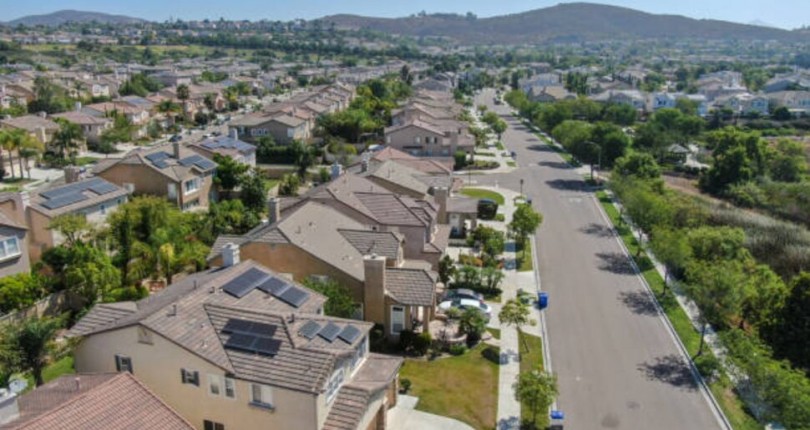
2024-2028 Housing Market Predictions: A Gradual Thaw With Added Challenges
As mortgage rates slowly fall, more buyers and sellers will enter the market, but housing prices should stabilize.
Over the next five years, although some trends accelerated by the COVID-19 pandemic will continue to influence real estate and land use, other factors will also gain in importance. Among those are an aging population, the rising costs of climate change, a more unstable world and the expansion of artificial intelligence into new corners of the economy. As a consequence, even if the housing market gradually unfreezes as mortgage rates slowly decline from 2023’s highs, the hottest housing markets in 2028 may look a bit different from early 2024.
This is based on data sourced from several authoritative sources, including the U.S. News Housing Market Index, an interactive platform providing a data-driven overview of the housing market nationwide.
Key Findings:
. After falling to a 28-year low in 2023, existing home sales will gradually rebound as mortgage rates decline.
. With home prices holding onto their gains due to lack of supply, true price discovery will occur as lending rates fall and more homes are listed for sale.
. Sales of newly built homes will hold their elevated market share due to builders’ ability to buy down mortgage rates plus pent-up housing demand.
. Rents will stabilize due to added supply and more closely track inflation rates.
Sales Will Remain Low as the Housing Market Slowly Thaws
A year ago, the main challenge in predicting what the next five years would bring for the housing market was a high level of uncertainty. Most economists were predicting a recession because the chances of engineering a “soft landing” to avoid inflation while also avoiding rising unemployment was deemed low. As it turns out, most economists were wrong about the reasons for the inflation, and the U.S. economy has proven to be more resilient than expected. The main questions now are how long it will take to bring inflation back to 2.0% as well as for mortgage rates to fall enough to spur more home sales.
According to the Fed’s most recent economic projections from December, economists don’t see inflation subsiding to 2.0% on a consistent basis until 2026, which could mean higher but declining short-term interest rates for the next two years. However, inflation could still be falling steadily between now and then, meaning lower mortgage rates probably will drop more or less in tandem. But with nearly 90% of homeowners with mortgage rates under 6%, they’ll have to fall well below that level to prompt sellers who can afford to wait.
True Home Price Discovery Will Be Delayed
As with any other financial asset, the sale price of a home cannot be determined until buyers and sellers agree on a price based on market conditions and the availability of financing. This process is known as price discovery.
But when a healthy marketplace such as housing locks up due to lack of supply or affordable financing, that discovery is frozen in place until more transactions can occur. Although a few sales can happen, their prices might be skewed due to unique factors such as desperate sellers in financial trouble or stressed-out buyers putting in offers without personally inspecting the properties. True price discovery requires rational buyers and sellers as well as plentiful competition.
In the case of the housing market, a key reason that home values have held up better than expected has been the “lock-in effect” of homeowners sitting on the lowest mortgage rates in a generation. While a certain share of owners have no choice but to sell their homes due to divorce, death, debt, growing families, job changes and other reasons, most are waiting for mortgage rates to drop before even considering their next move.
The somewhat artificially low level of inventory for sale over the last two years has helped prop up home values even in the face of higher mortgage rates. As of October, the national S&P CoreLogic Case-Shiller Index – the leading measure of U.S. home prices – reached all-time highs after rising 4.8% year-over-year.
If and when the traditional fixed-rate, 30-year mortgage rate falls below 6% and especially 5%, more inventory released into the marketplace will mean more competition among sellers, ushering in improving price discovery. As inventory returns to healthier levels (such as a supply of 6.0 months versus today’s 3.2 months based on sales rates), look for home values to adjust accordingly based on the usual inputs of location, size, age and curb appeal.


